Monday, November 10, 2008

How To Prevent Kidney Disease?

“This too shall pass - just like a kidney stone” -- Hunter Madsen

Kidney disease is also known as renal disease. It is characterized by kidney damage causing the kidneys unable to remove wastes, one of their prime functions.

Located near the middle of your back, just below the rib cage, kidneys are bean-shaped organs that come in a pair. They are comprise millions of 'filtration units' called nephrons, which filter blood.

The waste products are passed as urine. Kidney disease causes damage to nephrons (filtration units'), and the system goes awry.

The following tips may protect you against kidney disease
  1. Keep your diabetes under control
  2. Keep your hypertension (high blood pressure) under control
  3. Take your medicines for heart disease, diabetes, hypertension just as prescribed by your doctor. Also, ask your doctor about the drugs, ACE inhibitors and angiotensin-II receptor blockers for treating high blood pressure.
  4. If you suffer from heart disease get yourself tested for kidney disease
  5. If a close relative (viz. a mother, father, brother) has kidney disease, you may be at risk. Get yourself tested.
  6. If you're over 50 years of age get tested.
  7. Get your sore throat tested for a strep infection, and if it turns out positive, timely treatment can help prevent any inflammation of the kidney, preventing any damage.
  8. Remain alert to identify bladder or urinary tract infections early and get them treated as soon as possible.
  9. Bring your weigh under control, if it's not
  10. Don't smoke
  11. Don't abuse drugs
  12. Avoid overuse of painkillers
  13. Prefer water over other drinks
  14. Drink alcohol in moderation
  15. Undertake regular physical exercise
  16. Keep yourself relaxed, try relaxation techniques, hobbies, etc.
  17. Maintain healthy levels of cholesterol in your blood
  18. Eat healthy and consume less salt
Get more tips on protecting your health

References

Plus, Medline (2008,11,03,). MedlinePlus: Kidney Diseases. Retrieved November 10, 2008, from MedlinePlus Health Information from the National Library of Medicine Web site: 'http://'www.nlm.nih.gov/medlineplus/kidneydiseases.html#cat11

Education Program, National Kidney Disease (2008,04,30). National Kidney Disease Education Program Home Page. Retrieved November 10, 2008, from National Kidney Disease Education Program Web site: 'http://'www.nkdep.nih.gov/resources/make_the_kidney_connection.htm

Options, Life (2008,11,10,). Life Options | Kidney Disease Info | Risk Factors. Retrieved November 10, 2008, from Life Options Web site: 'http://'www.lifeoptions.org/kidneyinfo/ckdinfo.php?page=3

Information Clearinghouse, The National Kidney and Urologic Diseases (2007,08,--). Your Kidneys and How They Work. Retrieved November 10, 2008, from National Kidney and Urologic Diseases Information Clearinghouse Web site: 'http://'kidney.niddk.nih.gov/kudiseases/pubs/yourkidneys/#8


Editorial Staff, familydoctor.org (2005, 05,--). Chronic Kidney Disease. Retrieved November 10, 2008, from familydoctor.org Home Web site: http://familydoctor.org/online/famdocen/home/common/kidney/832.printerview.html

Services, Inc, Diabetes (--,--,--). Kidney Disease. Retrieved November 10, 2008, from The Diabetes Mall Web site: 'http://'www.diabetesnet.com/diabetes_complications/diabetes_kidney_information.php

Victoria, State of (2008, 10, --). Kidney disease - prevention - Better Health Channel.. Retrieved November 10, 2008, from Better Health Channel Web site: 'http://'www.betterhealth.vic.gov.au/bhcv2/bhcarticles.nsf/pages/kidney_disease_prevention?opendocument

Sunday, November 9, 2008

Protect Yourself From Aneurysms

Aneurysm: It's a bulge or "ballooning" in the wall of an artery. Arteries are blood vessels that carry oxygen-rich blood from the heart to other parts of the body. If an aneurysm grows large, it can burst and cause dangerous bleeding or even death.

Tips to protect yourself from Aneurysms
  1. Maintain your blood pressure well within acceptable limits
  2. Don't smoke cigarettes, cigars, etc. Did you know that smokers carry the risk of abdominal aortic aneurysm, that's 8 times more than in nonsmokers?
  3. Maintain a healthy weight
  4. Maintain healthy cholesterol levels, as 'High cholesterol' is a risk factor.
  5. Eat a low-fat diet,
  6. Engage in regular physical exercise
  7. If you're between the ages of 65 and 75 and have been a smoker you should have a one-time ultrasound screening test for abdominal aortic aneurysm. Remember. 'a stitch in time saves nine'
  8. Because the disease can run in families, if you've had a sibling who’s suffered an aneurysm, consult your doctor about your risk.
More tips on protecting your health

References:

Plus, Medline (2008,10,29). MedlinePlus: Aneurysms. Retrieved November 8, 2008, from Medline Plus Web site: 'http://'www.nlm.nih.gov/medlineplus/aneurysms.html#cat11

Healthcare Research and Quality, Agency for (2005, 01, 31 ). Task Force Recommends that Male Smokers Between the Ages of 65 and 75 Be Screened for Abdominal Aortic Aneurysm. Retrieved November 8, 2008, from Agency for Healthcare Research and Quality Web site: 'http://'www.ahrq.gov/news/press/pr2005/tfaaapr.htm

Edelson, Ed (2008,10.15, ). HealthDay. Retrieved November 8, 2008, from Health Day Web site: 'http://'www.healthday.com/Article.asp?AID=620334

Editorial Staff, familydoctor.org (2008,03,--). Abdominal Aortic Aneurysm (AAA). Retrieved November 8, 2008, from familydoctor.org Web site: 'http://'familydoctor.org/online/famdocen/home/articles/883.printerview.html

Network, HealthScout (--,--,--). Aneurysms - Symptoms, Treatment and Prevention. Retrieved November 8, 2008, from HealthScout Web site: 'http://'www.healthscout.com/ency/416/198/main.html

Health Letter, Mayo Clinic (1999,03,--). NADE Advocate Articles - Aortic Aneurysms - March/April 1999. Retrieved November 8, 2008, from National Association of Disability Examiners Web site: 'http://'www.nade.org/NADEpriorARTICLEMarchApril1999Aneurysms.htm

Tuesday, June 3, 2008

Prevention From Unintended Pregnancy

When it’s desired, getting pregnant or conceiving a baby is a happy moment for a couple. However, at times we just aren’t prepared to have kids, and that’s when a pregnancy becomes unwanted.

Not that you can’t terminate a pregnancy (the procedure is termed as abortion, or medical termination of pregnancy (MTP)), but it might still not be the ideal thing for you to go through. Given the scenario, prevention appears to be the best bet to take up.

Following are the different ways I discovered to protect oneself from an unwanted pregnancy.

  • Abstain from sex (this is the only method that’s supposedly 100% effective!)
The rest of the methods I felt were better classified into 5 different categories, namely Barrier Methods, Intrauterine Device (IUD), Hormonal Birth Control, Sterilization and Natural Family Planning.
  • Barrier Methods: Under this head the following are used.
      • Condoms (male condoms: more effective;female condoms: less effective)
      • The diaphragms
      • Cervical Caps
      • Spermicides
      • Shields
      • Contraceptive Sponges
  • Intrauterine Devices (IUD)
  • Hormonal Birth Control: The following fall under this category.
      • Pills
      • Injections
      • Skin patches
      • Vaginal rings
      • Hormonal implants
  • Sterilization:
      • Male sterilization operation, e.g. vasectomy (if you’re a man!)
      • Female sterilization operation (e.g Tubal ligation)
  • Natural Family Planning:
      • Not having sex when the woman partner is most likely to get pregnant.
I especially found THIS resource comprehensive and helpful.

According to a recent study by New York’s Guttmacher Institute, “…28 million women in the United States are at risk for an unintended pregnancy...”

With so many people (women and their concerned partners) not in favor of getting pregnant, prevention seems to be the best cure in sight.

Friday, May 30, 2008

Sexually Transmitted Disease (STD) Prevention

Sexually Transmitted Diseases (STDs) or Sexually Transmitted Infections (STIs) or Venereal Diseases (VD) are acquired when you have sex with an infected person, whether it’s oral, anal or vaginal. Further the infections can be transmitted even by skin-to-skin contact.

To prevent the bacteria, viruses and parasites that cause STDs from infecting a person, I discovered the following measures.

  1. Abstain from sex.
  2. Have sex only with only with an uninfected partner with whom you have a long-term, monogamous relationship (for both persons).
  3. Use Condoms, male or female, for all kinds of sex.
  4. Know whether a partner has an STD or has suffered from it earlier or not.
  5. Know whether a partner is an intravenous (IV) drug user.
  6. Don’t drink alcohol or take drugs when there’s a possibility of sex following it. Because when you are intoxicated the chances of you engaging in high risk sex increase.

In my opinion STI prevention isn’t just about preventing yourself form acquiring them, but also about preventing your partner from getting them through you. I think responsibility is important.

Some common STDs are Chlamydia, Gonorrhea, Herpes Simplex, HIV/AIDS, HPV, Syphilis, and Trichomoniasis.

Thursday, May 29, 2008

Prevention From Cervical Cancer

Infection by certain types (strains) of Human papillomavirus or HPV is considered to be the leading cause of cervical cancer. Considering only the infection by the cancer causing HPV, I came across the following tips to prevent Cervical Cancer.

  • Cervical Cancer Vaccine, this vaccine has been formulated to prevent cervical cancer, precancerous genital lesions and genital warts due to human papillomavirus (HPV) types 6, 11, 16 and 18.

  • Practice safe sex, use condoms as they can prevent the virus from infecting you in the first place. Moreover, according to a study conducted by University of Washington, “Women whose male sex partners use condoms consistently -- and correctly -- cut their risk of HPV infection by 70%.”

Learn more about the vaccine here.

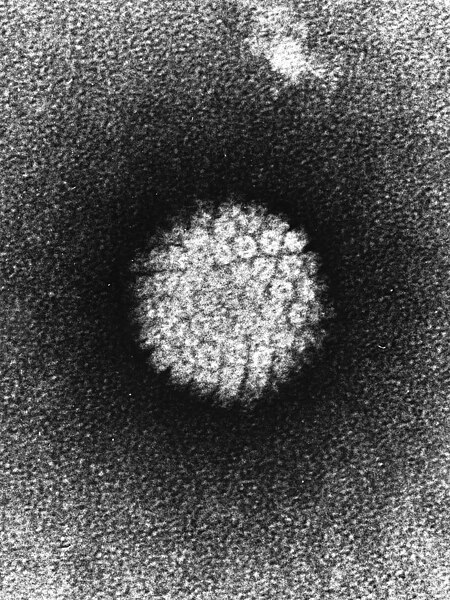
As I wrote this post, I felt like seeing the culprit HPV for myself. Here is it, down below.


Wednesday, May 28, 2008

Preventing Alzheimer's Disease (AD)

For now there isn’t a proven way to prevent Alzheimer’s Disease or AD, however the research continues. While the scientists may not have the final answer yet, they might have gathered some clues about the disease from the research work already completed.

There’s a suggestion that maintaining good health habits may decrease the chances of various diseases, including those that affect the brain. It seems that the best bet lies in going along with the following tips based on what has been discovered till now, and which may be helpful.

  1. Lower cholesterol and homocysteine levels
  2. Lower high blood pressure levels. How about preventing yourself from High BP?
  3. Control diabetes. BTW you might even try preventing it.
  4. Exercise regularly
  5. Engage in social activities (friends, family, etc.)
  6. Engage in intellectually stimulating activities.
  7. Protect your brain from trauma/injury/jarring
  8. Eat a healthy diet.

Hope the scientists and researchers soon hit the jackpot and get an answer. I hope and I hope and I wish and I hope...

Tuesday, May 27, 2008

How To Prevent Back Pain/Backache?

I’ve experienced it myself and I know how painful back pain can be. But I’m not alone; statistically 80% people have suffered from it at some time in their lives.

The good news to me appears to be the range of suggestions I came across for preventing back pain. Here they are:

  1. Undertake physical exercise (after a doctor’s consultation) to strengthen your back muscles, so that the muscles can effectively withstand the load and stresses of our daily activities.
  2. Maintain a healthy weight.
  3. Eat healthy, and consume right quantities of calcium and vitamin D, as it’s needed to keep our bones healthy.
  4. Give up smoking completely.
  5. Get enough sleep.
  6. Maintain a good posture, keep your back straight.
  7. Learn to lift properly. E.g. don’t bend over and then lift, rather when lifting keep your back straight and bend your knees, push rather than pull, etc.
  8. If you need to sit for long hours, take frequent breaks in between to stretch. Don’t sit for long at a stretch.
  9. Wear low heels or flat shoes.

Important: This isn’t about prevention though. But most resources I went through suggested that back pain shouldn’t be taken lightly as it can be due to several causes such as arthritis, kidney stones, pregnancy, tumors, infections and stress. Hence a person is better off consulting a doctor when suffering from back pain.

Monday, May 26, 2008

How To Prevent Type 2 Diabetes?

Type 2 Diabetes is also known as Adult Onset Diabetes, Non-insulin Dependent Diabetes, and commonly as “Sugar.”

From the resources I consulted, I figured that Type 2 diabetes can be prevented or at least delayed by following the following tips.

  1. Maintain a healthy weight.
  2. Exercise regularly: Moderate level (brisk walking, cycling, etc.), 5 days a week for 30 minuets each day.
  3. Decrease your intake of fat and calories.

It seems to me that diabetes is best prevented or kept well under control. The reason is that this condition over time can damage our nerves and blood vessels, and causing other ailments and disabilities as heart disease, stroke, blindness, kidney disease, nerve problems, gum infections, and may even necessitate amputation.

Quite scary, I’m gonna begin exercising from today itself!

Sunday, May 25, 2008

Protection From High Blood Pressure!

The condition of having a high blood pressure (or hypertension) is taken seriously by doctors as it can lead to strokes, kidney problems, heart attacks, it can affect your eyes and even cause death.

As I went about researching the medical condition I came across some very simple steps that you can take to possibly keep the problem at bay. Here’s what I found:

  1. Maintain a healthy weight.
  2. Eat fruits and vegetables.
  3. Eat low-fat foods.
  4. Physical exercise (moderate level, viz. brisk walks, cycling, etc.) for 30 minuets each day helps.
  5. Decrease common salt and sodium intake.
  6. Don’t smoke at all.
  7. Consume alcohol in moderation (for men 2 drinks and for women 1 drink a day).

Often when your blood pressure is high you don’t get to know about it, hence to get your blood pressure checked by a doctor might be the right thing to do. The sooner your doctor comes to know of your condition, the better it is, as she can then take steps to treat it.